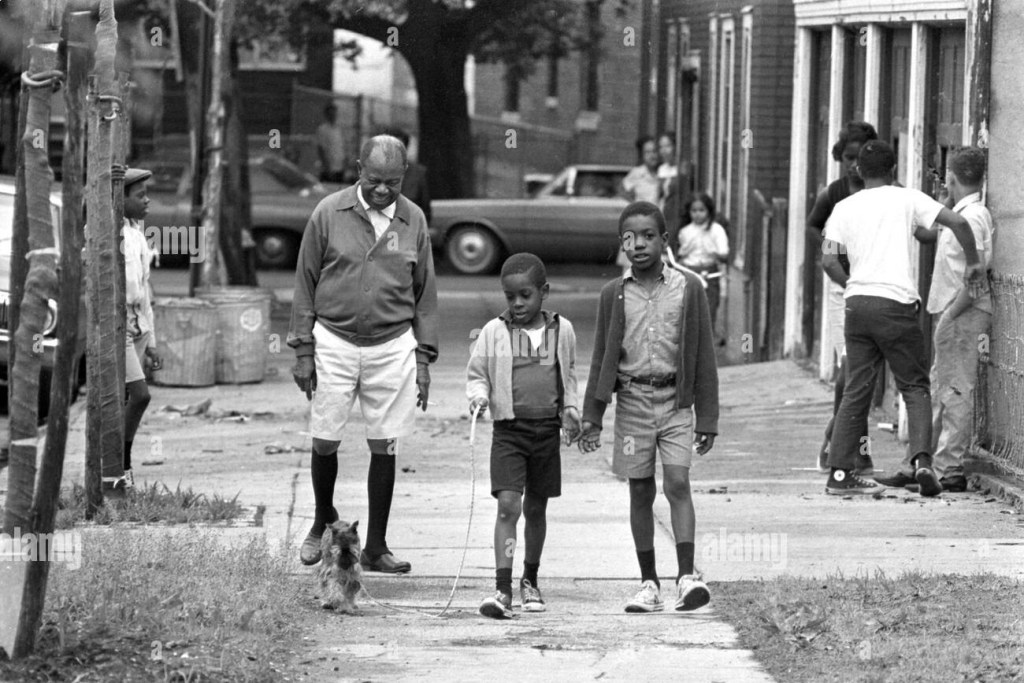

On this 1st Day of American Black History 2025 with Dr. Brice “Doc” Miller: Louis Armstrong, an American trumpeter and vocalist, (b) Aug 4, 1901, New Orleans, LA, (d) July 6, 1971 (69 years), Corona, New York, NY, cause of death, heart attack. Armstrong was America’s first Black Pop Star and one of the innovators of rap.
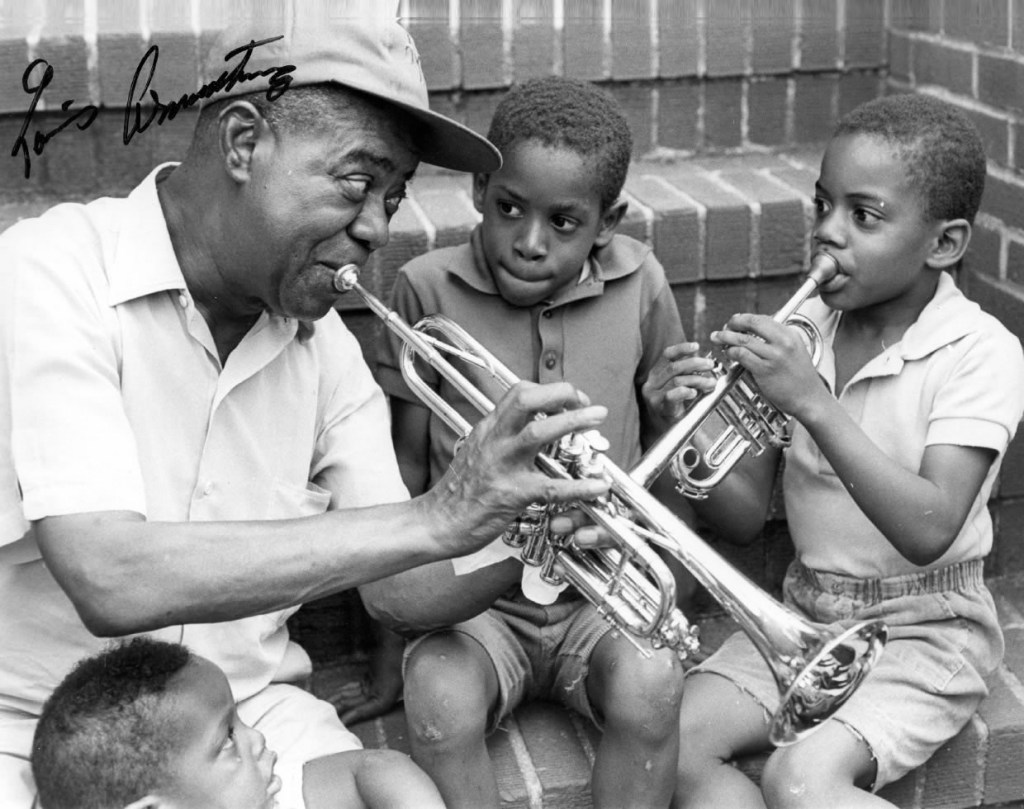
Louis Daniel Armstrong, nicknamed “Satchmo”, was a New Orleans-born trumpeter, singer, and entertainer who revolutionized jazz and popular music. His career spanned five decades and multiple jazz eras. Armstrong’s improvisational skills and emotional playing made him the first great jazz soloist, influencing every musician that followed. He expanded trumpet techniques and popularized scat singing.
He was one of the most influential figures in jazz history, famous for hits such as What a Wonderful World, appearing in Hollywood movies and working with stars from Bing Crosby to Ella Fitzgerald.
Louis Armstrong’s childhood, however, was a world away from his later life – he grew up in serious poverty in a neighbourhood plagued by crime and violence. New evidence has now shed fresh light on the musician’s early life, including revelations that both his mother and sister faced arrests for prostitution.


Black with the Blues. Armstrong wrote a letter to President Eisenhower calling him “two-faced” and saying he had “no guts” to control the situation . In September 1957, Louis Armstrong put his career on the line by speaking out against the injustice taking place in Little Rock, where Governor Orval Faubus sent in the Arkansas National Guard to prevent nine African American school children from integrating Central High School. “The way they’re treating my people in the south,” Armstrong vented to Larry reporter Lubenow, “the government can go to hell.” Just days later, President Dwight Eisenhower sent the 101st Airborne Division to Little Rock to make sure the students made it safely into school. Many believed Armstrong’s words led him to take action. Armstrong’s brave stance made headlines. Armstrong canceled a paid music tour to Russia because of the treatment of Black people in the South.
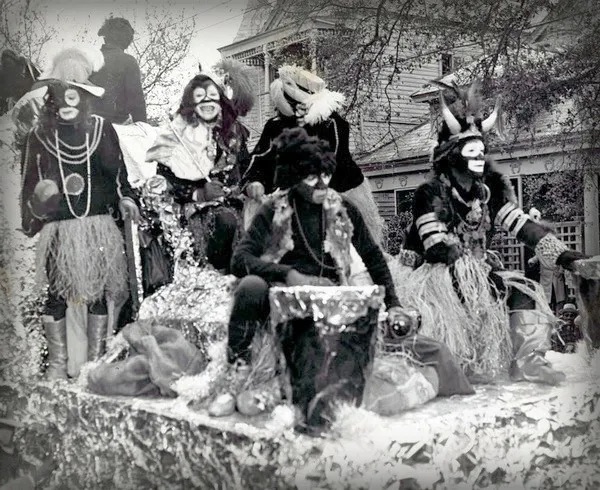
King ZULU! That time Louis Armstrong reigned as King of the Zulus at a segregated Mardi Gras parade. On Fat Tuesday in 1949, the last day of the carnival season in New Orleans, thousands of exuberant parade-goers swarmed the streets to get a look at the “King.” The dream to lead the parade began when Armstrong was a small boy growing up in Jane Alley, a Black neighborhood that had been sorely neglected by the city. It was known as “The Battlefield,” because of the violent fights and drunken brawls that would break out in the darkness of night. 40 years after the first Zulu parade, that dream would finally come true.
By then, Armstrong was a universal icon – a master trumpeter who had revitalized the world of jazz and made it his own. Armstrong’s unrivaled playing had ended the reign of big band jazz and made room for small bands to rise to the top. By 1949, he was travelling around the world to play his music but returned to his hometown for the honor of leading the parade.
“There’s a thing I’ve dreamed of all my life,” Armstrong told Time magazine in 1949, “and I’ll be damned if it don’t look like it’s about to come true – to be King of the Zulu parade. After that, I’ll be ready to die.”
 The NEW ORLEANS MUSIC COMPANY